
Blog
When It Comes to Your Health, How Hot Is Too Hot to Be Outside?


Because “just power through it” is not a medical strategy.
All summer long, we do this little mental math.
It’s hot, but not that hot.
I’ll be fine; just a quick walk.
People live in places hotter than this.
And sometimes that math checks out.
Other times, it… does not.
Because heat doesn’t announce when it’s crossed from “uncomfortable” to “actually risky.” It creeps. It accumulates. It stacks quietly on top of dehydration, poor sleep, stress, certain medications, and that coffee you had instead of breakfast.
So let’s talk about it. Not in a panic-inducing way. Not in a “never leave your house again” way.
Just an honest, grounded look at when heat exposure tips from annoying into dangerous and how to tell which side you’re on.
First: Heat Isn’t Just About the Number on Your Weather App

Temperature is the headline.
But it’s not the whole story.
What your body actually experiences depends on a handful of variables working together:
- Air temperature
- Humidity
- Sun exposure
- Wind (or lack of it)
- Your activity level
- Your hydration, sleep, and baseline health
That’s why 90°F (32°C) can feel manageable one day and completely crushing the next. High humidity limits your body’s ability to cool itself through sweat evaporation. Direct sun adds radiant heat. Still air traps it all around you.
In other words, heat stress is cumulative, not binary.
The Heat Index: The Number That Actually Matters
You’ve probably seen the phrase “feels like” tacked onto weather forecasts. That’s the heat index – a calculation that combines air temperature and humidity to estimate how hot it feels to the human body.
And this is where things get real.
As a general framework:
- Heat index 80-90°F (27-32°C): Mild heat stress possible with prolonged exposure or exertion
- Heat index 90-103°F (32-39°C): Increased risk of heat exhaustion
- Heat index 103-124°F (39-51°C): High risk; heat illness likely without precautions
- Heat index 125°F+ (51°C+): Extreme danger; heat stroke possible in minutes
The important part isn’t memorizing the numbers. It’s understanding that risk accelerates quickly once humidity enters the chat.
Your Body’s Cooling System Has Limits
Here’s the basic physiology, without the textbook voice:
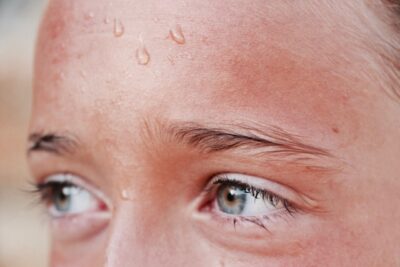
Your body cools itself primarily by sweating. Sweat evaporates. Evaporation pulls heat away from your skin. Temperature drops. Everyone’s happy.
Except when:
- The air is already saturated with moisture
- There’s no airflow
- You’re wearing restrictive clothing
- You’re pushing your exertion level
When sweat can’t evaporate, it just sits there. And your core temperature starts to rise.
That’s when heat-related illnesses show up; not suddenly, but progressively.
The Spectrum of Heat Illness (And What It Actually Feels Like)
Heat illness isn’t a switch. It’s a slope.
Heat Cramps
Often, the first sign that something’s off.
- Painful muscle cramps or spasms
- Usually in the legs, arms, or abdomen
- Often linked to dehydration and electrolyte loss
Annoying? Yes.
A warning? Also yes.
Heat Exhaustion
This is where many people try to “tough it out.” Please don’t.
- Heavy sweating
- Weakness or fatigue
- Dizziness or headache
- Nausea
- Cool, clammy skin despite the heat
At this stage, your body is struggling, but still responsive.
Heat Stroke
This is a medical emergency. Full stop.
- Core body temperature above 104°F (40°C)
- Confusion or altered mental state
- Loss of consciousness
- Hot, dry skin or profuse sweating
Heat stroke isn’t about willpower. It’s about system failure.
So… How Hot Is Too Hot?
Here’s the honest answer:
It depends on you and the conditions.
But some practical guardrails help:
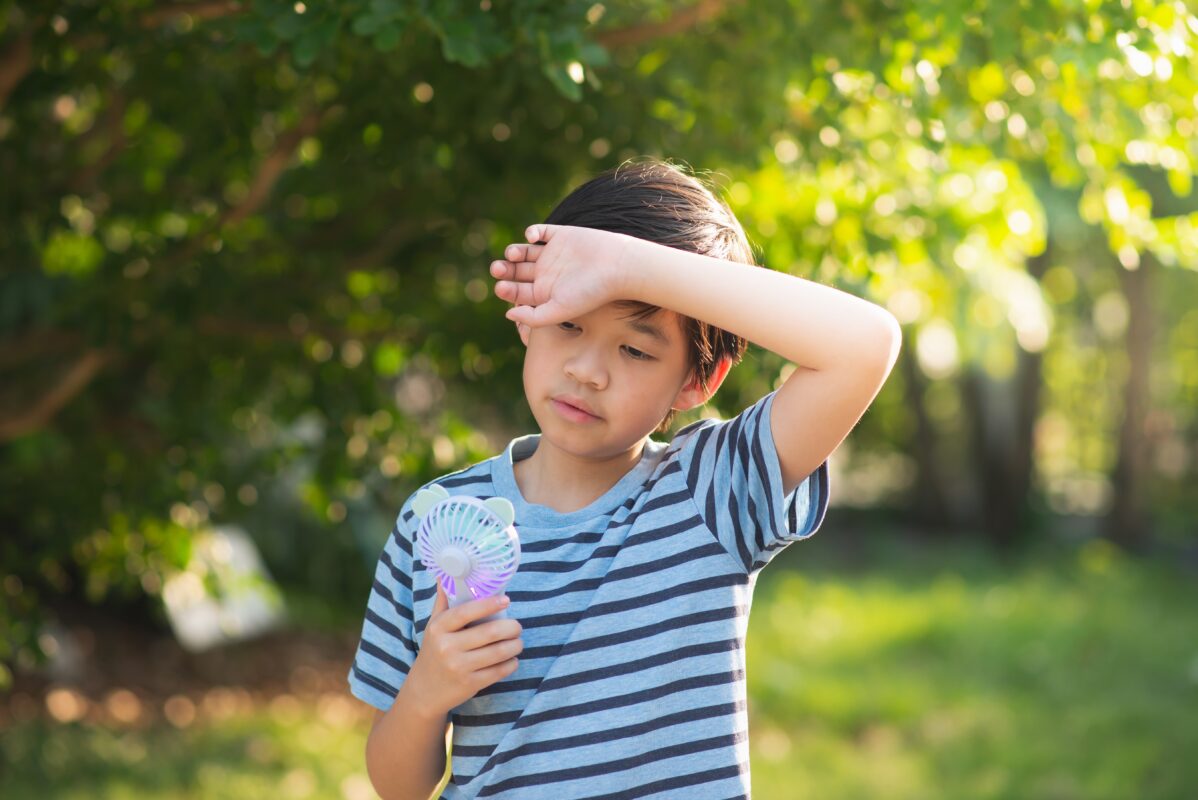
- If the heat index exceeds 90°F, limit strenuous outdoor activity.
- Above 100°F, avoid prolonged exposure altogether, especially midday.
- If you can’t cool down within 30 minutes after being outside, that’s a sign to reassess.
And yes, people acclimatize to heat over time. But acclimatization is gradual and reversible. A few hot days do not make you invincible.
Who Needs to Be Extra Careful (Even Below Extreme Temps)
Heat risk isn’t evenly distributed.
You’re more vulnerable if you:
- Are pregnant
- Are over 65
- Have cardiovascular, respiratory, or kidney conditions
- Take certain medications (including diuretics, antidepressants, stimulants, and blood pressure meds)
- Haven’t been sleeping well
- Are recovering from illness
- Are dehydrated (which is more common than we like to admit)
Translation: you don’t need to be running a marathon to be at risk.
Why “I’m Used to the Heat” Isn’t a Get-Out-of-Jail-Free Card
This belief is incredibly common and only partially true.
Yes, repeated heat exposure can improve:
- Sweat efficiency
- Cardiovascular response
- Perceived tolerance
But acclimatization:
- Takes 7-14 days of gradual exposure
- Can be lost in as little as a week
- Doesn’t override hydration, sleep, or health status
And crucially: it doesn’t protect you from extreme heat events.
Your body adapts. Physics does not.
The Dehydration Trap (And Why Thirst Is a Late Signal)

By the time you feel thirsty, you’re already behind.
Even mild dehydration reduces your ability to regulate temperature. Add caffeine, alcohol, or intense sun, and the margin shrinks further.
Some cues you’re not hydrating enough:
- Dark urine
- Fatigue that feels out of proportion
- Headache
- Lightheadedness
Water helps.
Electrolytes help more if you’re sweating heavily.
No, this doesn’t mean you need neon sports drinks at all times. But replacing sodium matters when heat exposure is prolonged.
Timing Matters More Than You Think
The hottest part of the day is usually between 11 a.m. and 4 p.m.
The sun angle is higher. Radiant heat increases. Shade helps less than you expect.
If you can:
- Exercise early morning or later evening
- Run errands during cooler windows
- Shift outdoor work where possible
You reduce risk without changing much else.
This is not a weakness. It’s logistics.
Clothing, Shade, and the Myth of “Breathable Enough”
Light-colored, loose-fitting clothing helps reflect heat and allow airflow. Natural fibers often feel better, but modern performance fabrics can work well too if they’re actually designed for heat dissipation.
Hats help. Shade helps. Sunscreen helps (sunburn impairs cooling).
What doesn’t help:
- Tight, dark clothing
- Cotton that stays soaked and traps heat
- Ignoring direct sun because “the air feels fine.”
Mental Clarity: The Overlooked Symptom
One of the earliest and easiest to miss signs of heat stress is cognitive change.
- Slower reaction time
- Poor decision-making
- Irritability
- Confusion
If you’re thinking, Why am I being so bad at basic things right now?
Heat may be involved.
Your brain is temperature-sensitive. Protect it accordingly.
A Quick Reality Check on “Pushing Through”
Culturally, we reward endurance.
Medically, endurance without awareness is how people get hurt.
Heat illness doesn’t mean you’re unfit. It means your body hit a constraint.
Listening earlier prevents bigger problems later. That’s not caution, it’s competence.
For Your Sanity: Practical Heat Rules That Actually Work
- Check the heat index, not just the temperature
- Hydrate before you go out, not just during
- Take breaks in shade or air conditioning
- Lower intensity when the humidity is high
- Leave if symptoms start. Don’t negotiate with them
If cooling down doesn’t help within 20-30 minutes, or symptoms escalate, that’s your cue to seek medical advice.
The Bottom Line
There’s no single temperature where the outdoors becomes “off limits.”
But there is a point where ignoring conditions becomes risky.
Heat is manageable when you respect it.
It’s dangerous when you dismiss it.
And the smartest move isn’t staying inside forever. It’s learning when to adapt, when to pause, and when to call it a day.
Your body is not being dramatic.
It’s being precise.
And in extreme heat, precision matters.